You built a website. You paid for it, or you spent your weekends fighting a page builder to make it. And when you search for what you do, it's nowhere. Page two, page five, or just… nothing.
I hear this from small business owners constantly, and I'm going to walk you through the exact diagnosis I do when someone brings me an invisible website. No jargon, no scare tactics. Just what's usually broken, how to check some of it yourself for free, and how to think about when it's worth getting help.

The first question I ask every owner
Before I even look at your website, I ask one thing: what kind of business is this?
- Do you have a physical location customers walk into?
- Do you travel to your customers — landscaping, cleaning, mobile services?
- Or are you an online shop with no geography at all?
This matters because it changes how Google views your business entirely. A nail salon in Buffalo Grove and an online candle store are playing two different games with two different rulebooks. Most advice online ignores this completely, which is why owners end up applying the wrong playbook — or worse, mixing both and confusing Google about what they even are.
This post focuses on the local business, because that's where I see the most heartbreak: real businesses with real customers nearby who simply cannot find them. If you're online-only, some of this still applies, but your game is mostly different — that's a topic for its own post.
The two things that are almost always broken
When a local business is invisible on Google, my diagnosis almost always lands in one of two buckets: the Google Business Profile was set up wrong, or the website itself is built in a way Google can't properly crawl and understand. Often it's both.
The Google Business Profile problems
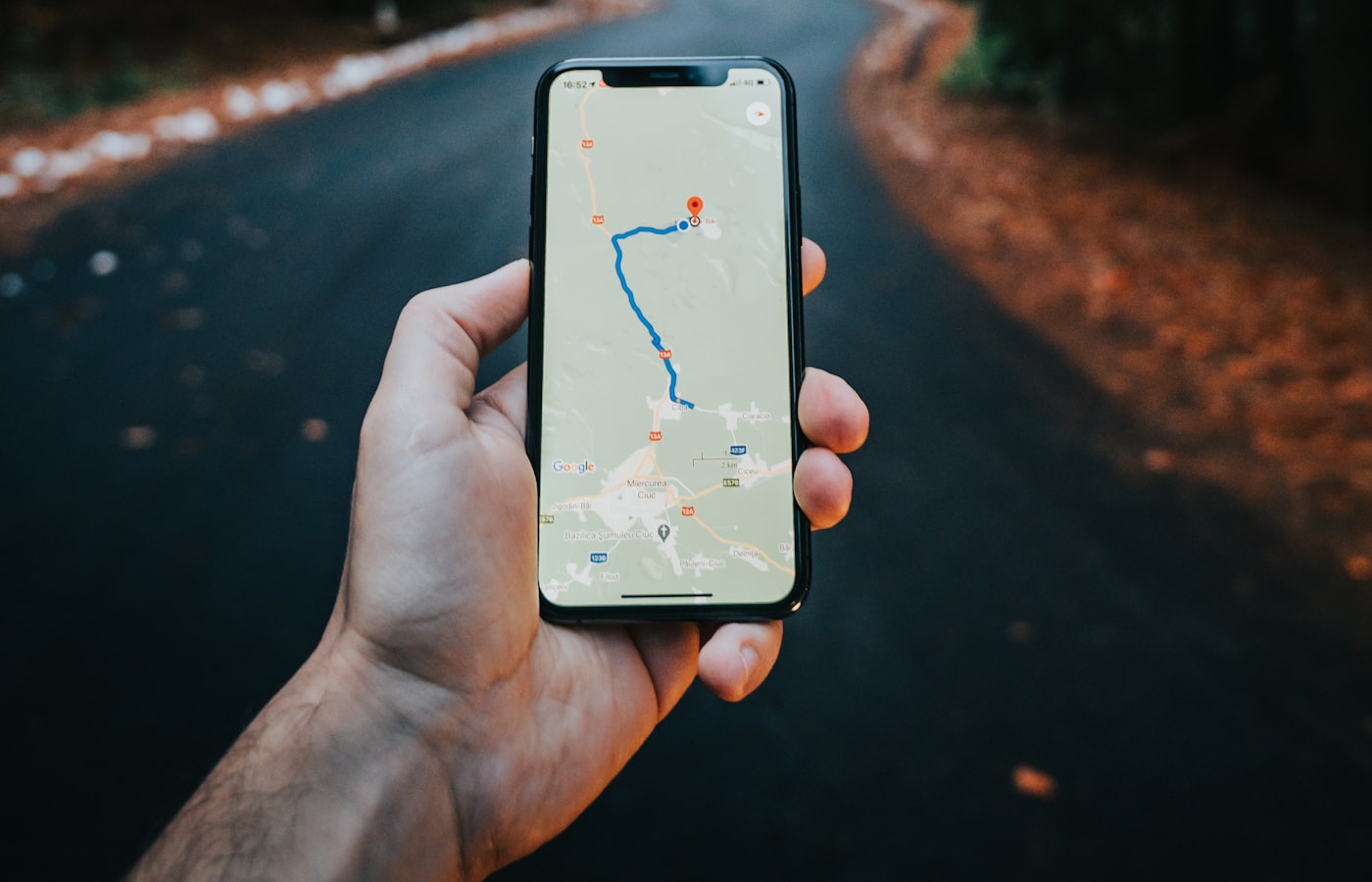
Google takes its Business Profile very seriously, and here's the part most owners don't realize: if your profile isn't properly verified, it's essentially not going to show up. Verification is the gate. Everything else comes after.
Beyond verification, these are the setup mistakes I find over and over:
- The wrong business category, so Google files you under the wrong kind of business
- A business name on the profile that doesn't match the name on the website — that mismatch erodes Google's trust in both
- Wrong or missing hours
- No photos at all
- A setup that was simply never finished, leaving Google without enough information to validate the business
- A verified, complete profile with no reviews on it — technically fine, but it gives Google nothing to weigh you against a competitor with forty (here's how to fix that)
None of these are exotic. They're the digital equivalent of a shop with no sign, papered-over windows, and a door that might be locked. Google looks at that and quietly decides not to send people your way. If this bucket sounds like yours, I wrote a step-by-step Google Business Profile setup guide that walks through every setting that matters.
The website Google can't read
The second bucket is the site itself. And honestly, it's a little bit of everything.
Some owners have done too little. But a surprising number have done too much. They watched a YouTube video, decided they knew SEO, and went to work: messy, keyword-stuffed meta titles and descriptions, every keyword they could think of crammed into one page, and no structure at all. I've opened up homepages with ten H1 tags on them. If you don't know what an H1 tag is, think of it as the headline of a page — and imagine a newspaper front page with ten giant competing headlines. Google looks at that and can't tell what the page is actually about.
Page builders are their own trap. The defaults look genuinely good, and that's the problem — customers don't realize how rigid they are underneath. Most of those sites are templates wearing different fonts, and when you need real structure, real speed, or real flexibility, you hit walls. I compared the two paths honestly in Wix vs. a custom website — including when staying on the builder is the right call.
If I had to name the single biggest issue across all of them, it's this: incorrect SEO structure and hierarchy. Not a missing magic keyword. Just a site that was never organized in a way Google can read. If your homepage is part of the problem, here's what makes a homepage actually work.

The business that failed because nobody could find it
Let me tell you about a client of mine — this one stuck with me.
Before we met, he'd had another business. Construction. He hired a friend to build the website and handle the SEO. And technically, the site worked: if you searched the exact business name, he came up first. His friend probably considered the job done.
But here's the thing — his business name had nothing to do with construction. No local SEO was ever done. No blog posts, no service pages, no content of any kind to help a customer searching “concrete contractor near me” or “home addition builder” ever find him. He was findable, but he was not discoverable. The only people who could reach his site were people who already knew he existed.
That business basically failed for lack of customers. Not because he was bad at construction — because he was invisible at the exact moment people were looking for what he sold.
That's the trap: being findable by name isn't the same as being discoverable by need. Nobody searches for your name until after they've found you.
The 10-minute self-check you can do right now
You can diagnose part of this yourself, today, for free.
The verification check is simple. Make sure you're logged into the Gmail account that owns your Google Business Profile, then just type “Google Business Profile” into Google. Your profile panel will come up. If there's no checkmark and it doesn't say you're verified — there's your answer. Google is usually very helpful with documentation about what's holding verification up, so start there and try to fix it.
While you're at it, search for what you do plus your town — not your business name. “Nail salon Buffalo Grove.” “Deck builder Palatine.” If your competitors show up and you don't, you now know exactly what your customers are experiencing.

Where DIY honestly stops
Here's the framework I give people, and it has nothing to do with technology: what is one customer worth to you?
If one new customer could meaningfully change your business — this week, this month — then the math on getting real help gets very simple. Find a reliable developer who knows what they're doing and can show you results: real clients, real traffic, even modest traffic. Because even 1,500 views and ten or twenty clicks a month is something. It's better than zero, it's better than what you have now, and it's progress that compounds.
And I'll be straight with you about the DIY route: most of the people reading this aren't technical, and that's fine — but I've also watched genuinely good programmers make SEO worse, because writing code and understanding search are two different skills. If you've read this far and recognized your website in it, that recognition is the diagnosis. The fix is usually not a weekend project.
This is exactly the kind of untangling I do in my SEO work for small businesses — it always starts with an audit that tells you what's actually wrong before you spend a dollar fixing anything.
How long until you show up? The honest answer
SEO is a bit of a mystery, and anyone who promises you exact dates is selling something. I've seen a blog post rank for a keyword within forty-eight hours. I've seen the same kind of post take two weeks. Seasons matter too — one of my clients is a travel advisor, and her keywords rotate all year. Recently she got a huge wave of traffic for cruise drink packages, purely because it's cruise season and that's what people are researching. Same site, same work, different month.
What I tell clients to actually expect: stay consistent with someone who monitors your keywords and hunts for quick wins every month, and around three months in, things start to move. Sometimes faster — that same travel advisor started from a brand-new site with zero authority and saw results within a month and a half, including three real customers in that window. For a fresh domain with no trust built up with Google yet, that's a genuinely good outcome.
The pattern is always the same: nothing, nothing, small signs, then compounding. The businesses that win are the ones still publishing and improving in month three when the impatient ones have quit. And if traffic is arriving but nobody's booking, the problem may be the site itself — here are the signs it's time for a redesign.

“SEO is dead, AI took over” — let's kill this myth
I hear this one a lot now: SEO is dead, AI answers everything, why bother.
Here's my honest take. AI is important — and the SEO game is evolving every single day because of it. Evolving is the opposite of dead. The businesses showing up in AI-generated answers are overwhelmingly the ones with well-structured sites, verified profiles, and real content — in other words, the ones that did SEO properly. The inputs didn't change; the outputs got a new interface.
And the other thing I tell every client: SEO is not a one-time thing. It's not a box your website either has checked or not. It needs continuous improvement — keywords shift, seasons rotate, competitors move, Google changes. If you don't know what you're doing, get a person you can trust, or an agent who does this daily, to build you a proper SEO system and keep improving it. That consistency is the entire game.
Where to start
If your website isn't showing up on Google, don't panic and don't start stuffing keywords. Run the ten-minute check: confirm your Google Business Profile is actually verified, search what you do plus your town, and be honest about what you find. If you want to understand the fundamentals first, start with my plain-English explanation of how SEO actually works. And if you're still running mostly on social, here's why that caps your reach no matter how well you post.
And if you'd rather just know what's wrong — ask someone whose job is finding out. The diagnosis is always cheaper than the months of invisibility. Tell me about your site →