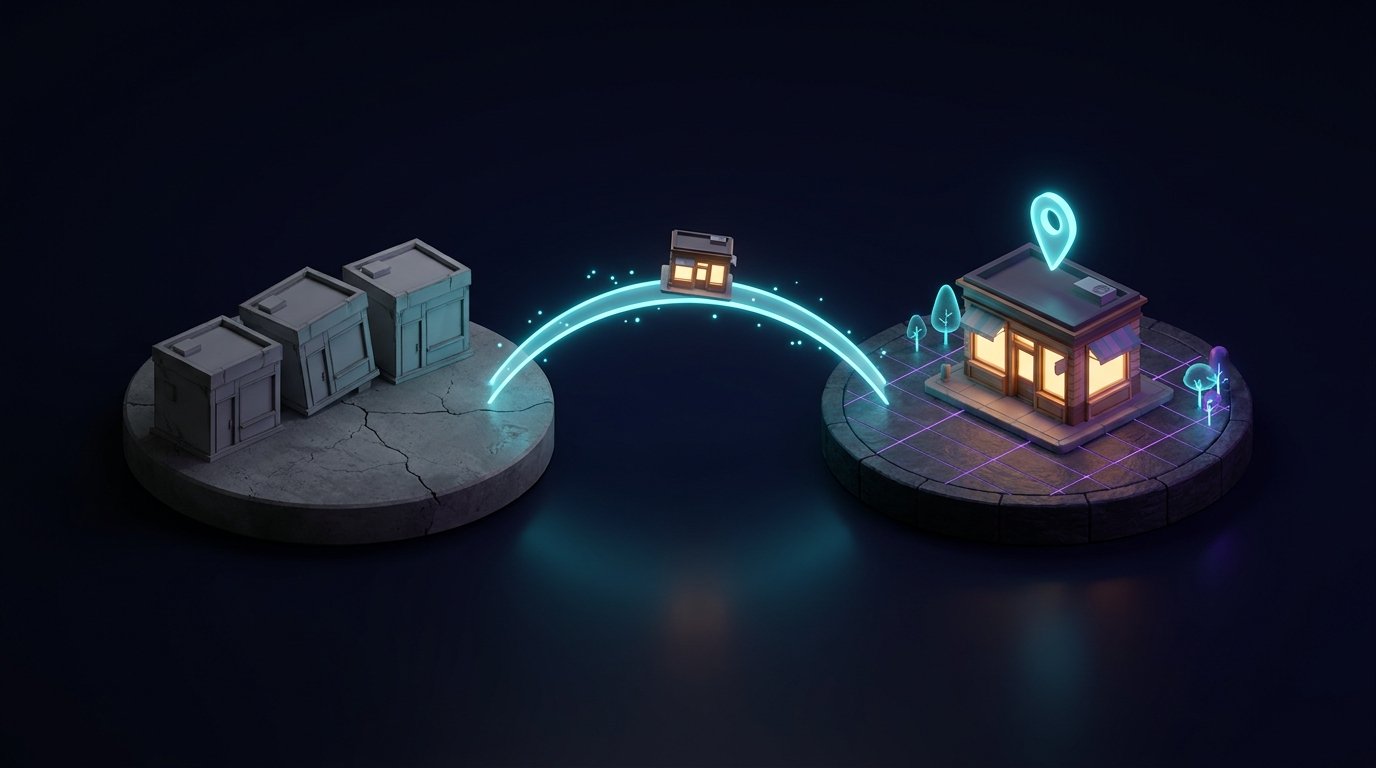
Most business owners have a vague feeling that their website is “kind of old.” But a vague feeling is a terrible reason to spend $5,000 to $15,000 on a full rebuild. Sometimes a redesign is the right call. Other times, a targeted refresh — updating colors, swapping images, tightening up the copy — is all you need. Here's how to tell the difference.
First: refresh vs. redesign
A refresh is like repainting your kitchen. The structure stays. You're updating the look, fixing a few things, and making it feel current again — a new color palette, fresh photos, a mobile menu, cleaner homepage copy.
A redesign is tearing out the walls. You're rethinking the structure, the navigation, the messaging, the user journey, and often the platform it runs on. It typically takes two to six months and a real budget — here's what that budget actually looks like.
The honest truth: about 80% of small business websites that owners think need a redesign actually just need a refresh. A refresh fixes presentation problems. A redesign fixes structural ones. The key is knowing which problem you actually have.
Signs you need a full redesign
1. Your mobile experience is broken — not just “not great”
This is the single most urgent reason to rebuild in 2026. Over 65% of web traffic now comes from mobile devices. If your site has tiny tap targets, text that requires pinching to read, layouts that break on a phone screen, or a menu that simply doesn't work — you are actively losing customers every single day. Google also ranks mobile-first. A non-responsive site isn't just a bad user experience; it's an invisible one.
Quick test: pull up your site on your phone and try to navigate to your Contact page in under 10 seconds. If you can't do it easily, your mobile experience is broken.
2. Your conversion rate has fallen for two or more quarters
Traffic without conversions is expensive vanity. If form submissions, quote requests, booking completions, or phone calls have been sliding — and you've ruled out traffic and seasonality as causes — the problem is likely your site's user journey, not your offer. Weak calls to action, confusing navigation, buried information, and messaging that doesn't speak to today's customer all contribute to conversion decay. These are structural problems a refresh won't solve. Industry data is consistent: a well-executed redesign can improve conversion rates by 20–200%, depending on how outdated the original was, and bounce rates often drop 10–40% after a modern rebuild, especially on mobile.
3. Your business has changed — but your site hasn't caught up
Did you add a new service line? Pivot your target audience? Rebrand entirely? If the website still describes a version of your business that no longer exists, visitors are confused before they've read a single sentence. This isn't a copy refresh. It's a structural mismatch between your current business and the digital front door you're sending people through.
4. You need functionality your current site wasn't built to support
Online booking? An e-commerce store? A client portal? A job board? A recurring subscription? If your current site was built as a simple brochure and you need it to do things now, that usually requires a rebuild — not a patch. Trying to bolt complex functionality onto an old foundation tends to create fragile, slow, hard-to-maintain systems that cause more problems than they solve.
5. Your Core Web Vitals are failing — and optimization alone won't fix it
Google's Core Web Vitals — LCP (loading), INP (interactivity), and CLS (visual stability) — are direct ranking signals. If your site consistently fails these even after you've optimized images and cleaned up your code, the problem is often architectural: an outdated theme, too many conflicting plugins, or a framework never built for performance. If you're on a page builder, that ceiling is real — this comparison covers when it's worth moving and how to migrate without losing rankings.
Quick test: run your URL through Google's PageSpeed Insights (free). If your mobile score is below 60 and multiple Core Web Vitals are in the red, optimization alone probably won't get you there.
Signs a refresh is all you need
- Your structure and navigation still make sense. If visitors can find what they're looking for, understand what you do, and reach your contact page without confusion, the bones are good. A refresh just makes it look and load better.
- Your content is accurate, just dated in presentation. If your services, pricing, and messaging are still correct but the page feels like it was designed in 2019, updated fonts, colors, photography, and a new hero section can modernize how it feels without rebuilding what it says.
- Your budget is under $2,000 or your timeline is short. Refreshes can often be done in days or a few weeks. A redesign is a two-to-six-month project. If you need improvement quickly, a strategic refresh almost always outperforms a rushed, under-resourced rebuild.
- You're embarrassed to share your link, but nothing is broken. Being embarrassed by your design is a refresh problem, not a redesign problem. Updated visuals can transform how your site feels without touching the structure underneath.
The 5-minute self-audit
Before you make any decision, spend five minutes answering these honestly:
| Question | If yes… |
|---|---|
| Does my site look worse than three competitors I respect? | Refresh or redesign |
| Does my mobile score in PageSpeed Insights sit below 60? | Redesign likely needed |
| Can I update my own content without calling a developer? | Refresh may be fine |
| Has my business model changed in the last 2 years? | Redesign likely needed |
| Are my conversion rates falling for non-obvious reasons? | Redesign likely needed |
| Is the design dated but everything works correctly? | Refresh |
| Do I need new functionality (booking, store, portal)? | Redesign |
If you answered “redesign likely needed” to three or more, a full rebuild is probably the right investment. If it's one or two, start with a targeted refresh and measure the results before committing to more.
Redesigns only deliver ROI when they're done right
A redesign isn't a silver bullet. Sites rebuilt without a clear content strategy, fast hosting, mobile-first design, and proper SEO structure can come out the other side looking better but performing worse — especially if they lose existing search rankings in the process. If you decide a redesign is the right move, the most important thing you can do is start with a clear brief: who is the site for, what do you need them to do, and how will you measure success? The design is the last piece, not the first.
Need help figuring out whether your site needs a refresh or a full rebuild? That's exactly the kind of thing we think through with clients in a consulting sprint. Get in touch →